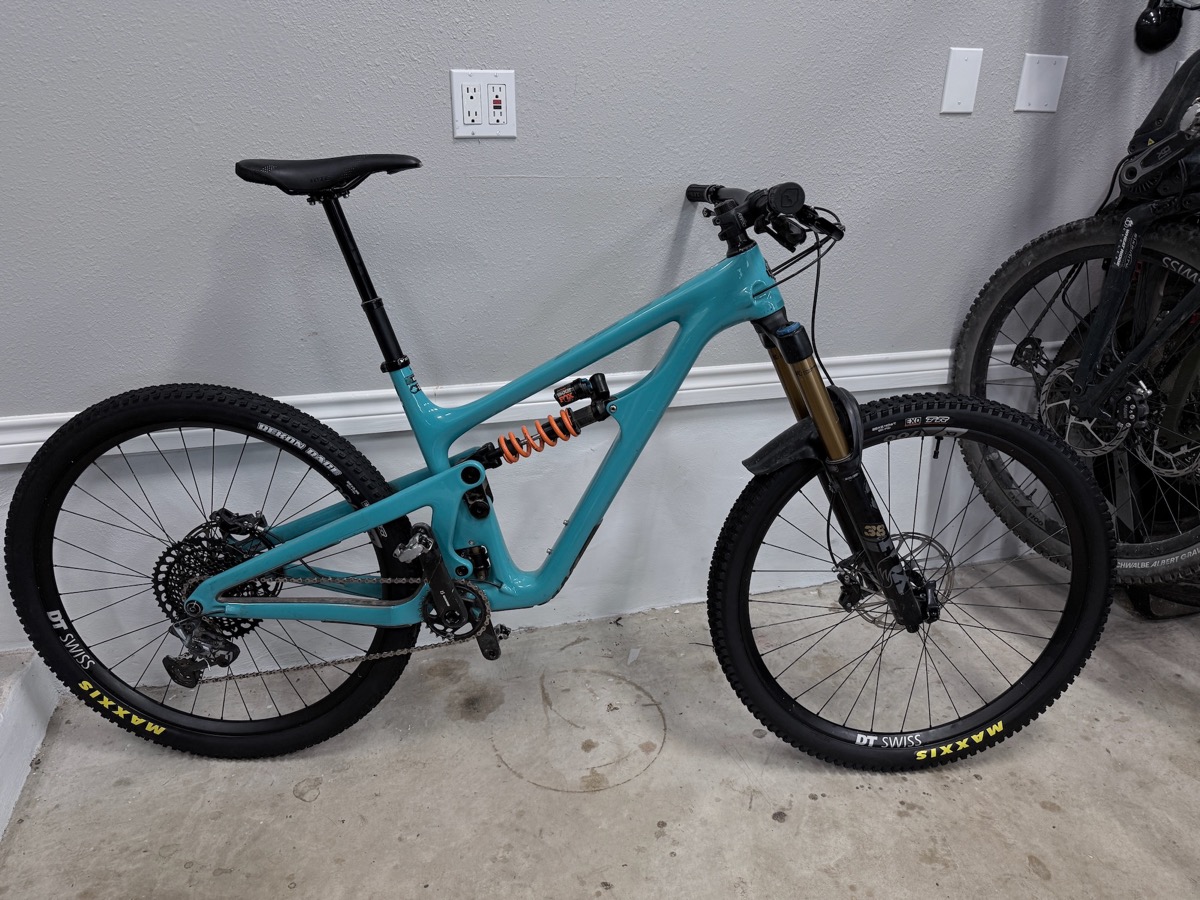
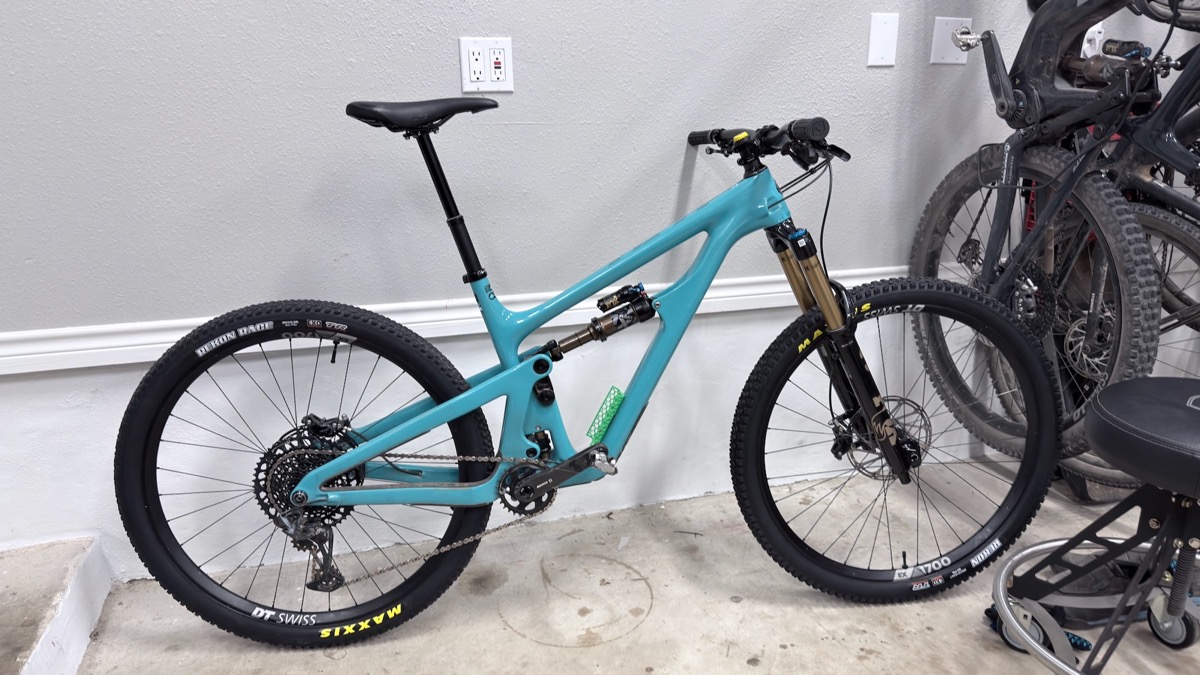
SB150BR: The Breakfast Ride Build
It actually started over beers after the Dos Gravel race. The guys said, “You should try the Austin Rattler.”
If you haven’t been to Reveille Peak Ranch, imagine granite domes, rolling ledges, and loose dust that somehow steals watts right out of your legs. The climbs are relentless, the descents rough and fast — pure Hill Country punishment. Three laps gets you a Leadville 100 slot, but that’s fantasy for me. One loop might be doable. Rattler? Maybe.
The problem was simple: I didn’t really have a bike for it.
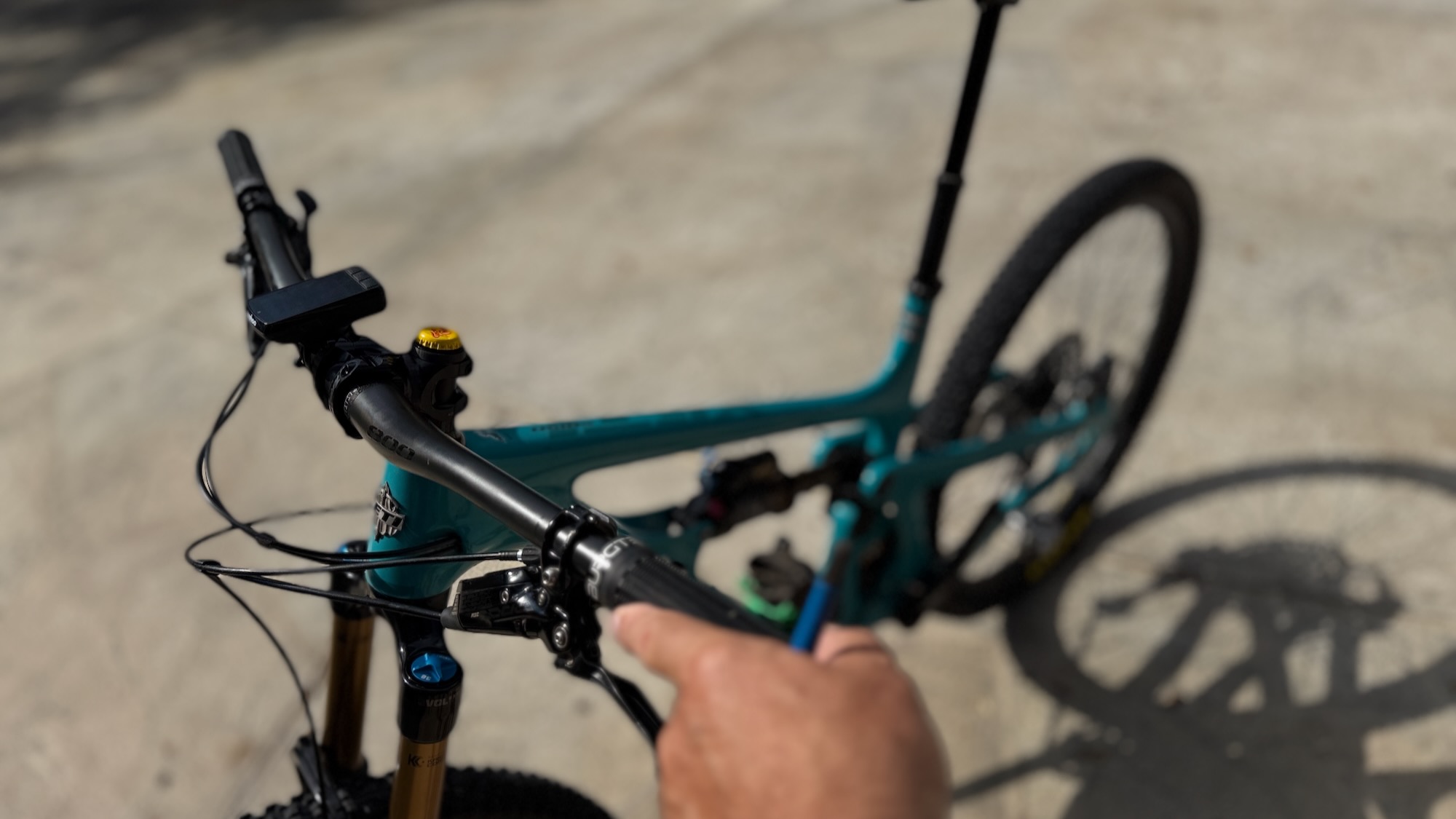
The Bike I Already Had
What I did have was my trusty Yeti SB150, a 2019 frame that’s been everywhere — Telluride, Purgatory, Snowmass. It’s mostly been my park bike. Lately I’ve been on the e-MTB more, and the 150 just hung there on the rack, half retired.
I even thought about selling it.
Then I realized: this frame could be the foundation of a Rattler race rig. If I could make it feel somewhere between an SB140 and an SB120, maybe I’d have something. Lighter, steeper, snappier — still tough enough to rip the chunks.
That’s where the Breakfast Ride name came from.
Yeti has its Lunch Ride builds — they over-fork their bikes for more travel.
This is the opposite. I under-forked mine.
Step One — Shock and Fork
First thing to go was the coil.
Loved it in the park, hated it everywhere else. Too heavy, too linear.
I wanted support, progressiveness, and that firm-mode lever!
That led straight to a Fox Float X.
Stock tune, no spacers touched. Lighter than the coil or the Float X2, and the feel is right in the middle — active, but never wallowy.
That lever lets me flip into a firmer platform on long, loose climbs. Perfect.
Next came the fork.
The Fox 38 was way too much for Reveille Peak, so I went with a Fox Factory 36 GRIPX @ 160 mm.
Ten millimeters shorter doesn’t sound like much, but it changes everything.
So I pulled up the geometry charts.
Geometry by Feel and Math
A shorter fork steepens the head angle, shortens the wheelbase, and drops the bottom bracket.
Would it ruin the SB150’s character?
I lined it up against the SB140 and SB120 numbers and felt better right away.
| Model (Large) | Fork | Head Angle | BB Height | Wheelbase | Notes |
|---|---|---|---|---|---|
| SB120 | 130 | 66.2° | 337 mm | 1220 mm | |
| SB140 | 160 | 65.0° | 342 mm | 1246 mm | |
| SB150 (2019, stock) | 170 | 64.5° | 347.9 mm | 1248 mm | |
| SB150BR | 160 | ≈ 64.9° | ≈ 344.9 mm | ≈ 1243 mm | Est. from 10 mm fork drop (+0.4°, −3 mm BB, −5 mm WB) |
A few tenths steeper, a few millimeters lower, and just a touch shorter.
Right between a 150’s stability and a 140’s agility.
Basically, a free geometry update through subtraction.
Step Two — Tires and Weight
The park rubber had to go.
I swapped to a Maxxis Rekon 2.4 front and Rekon Race 2.35 rear, running 22 / 24 psi.
Fast, light, predictable — not perfect in moon-dust, but it rolls like a rocket.
I kept the rims, drivetrain, and bars the same; just lighter where it mattered.
Even the pedals got the treatment: an old pair of m540’s from the parts bin, cleaned, greased, and spun until they felt new again. No sense in buying something shiny when the old ones still work.
Step Three — Fit and the Nerve-Wracking Cut
The old setup was pure enduro — tall front, slaaaaack. For Rattler, I needed to drop the stack and get more weight on the front wheel.
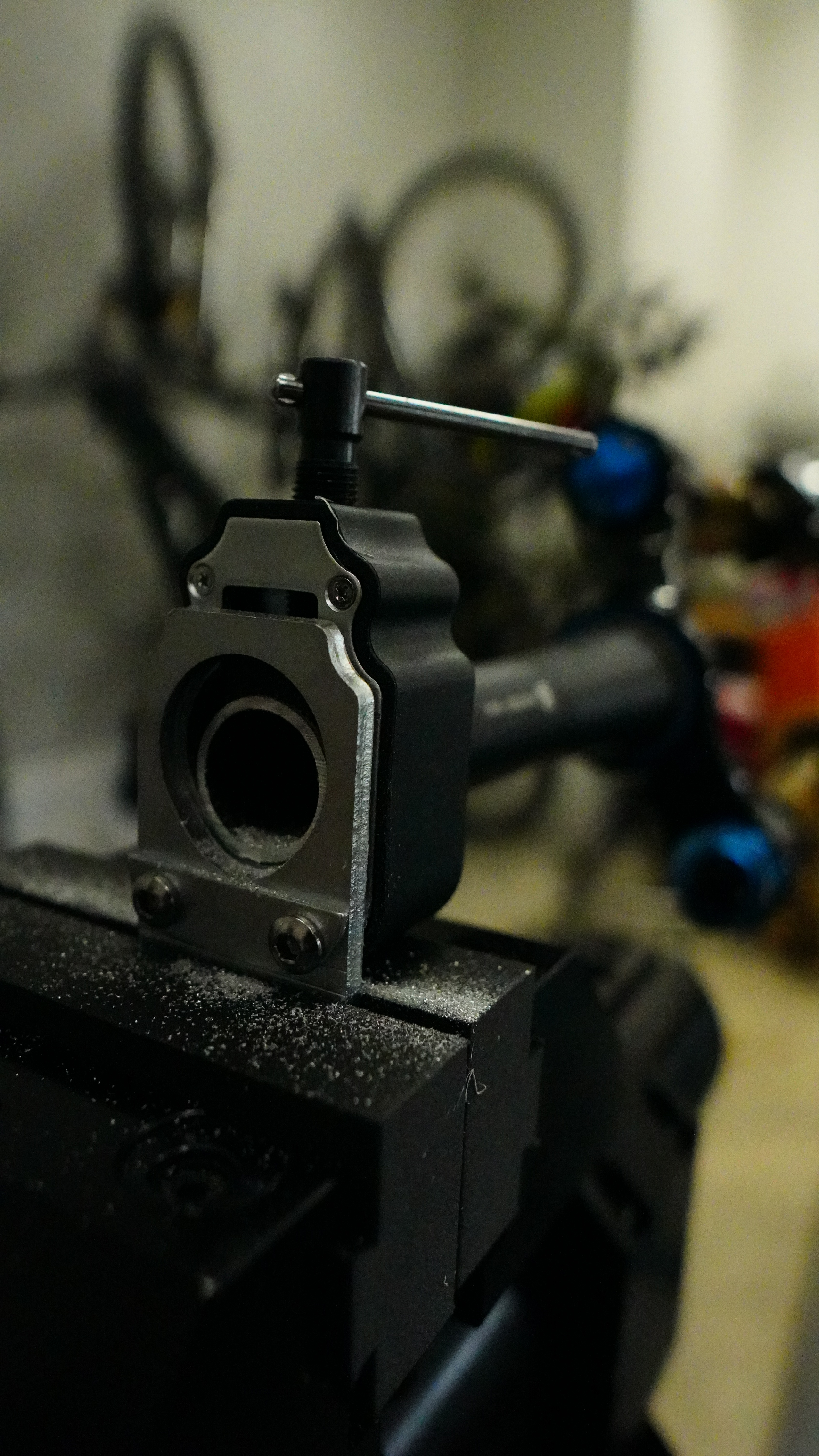
So I grabbed the hacksaw.
Measured, 3 times.
Headset bearings from 2019 — still smooth, just needed fresh grease.
With a couple of 3d printed spacers we were good, stack height landed perfect.
Suspension Setup
(All clicks counted from fully closed / clockwise)
Fork – Fox 36 Factory GRIP X (160 mm, 29”)
- Air pressure: 95 psi
- Sag: ≈ 30 %
- High-speed compression (HSC): 8 clicks out (of 12)
- Low-speed compression (LSC): 10 clicks out (of 16)
- Rebound: 10 clicks out (of 16)
Shock – Fox Float X (stock)
- Sag: ≈ 28 %
- Rebound: 10 clicks out (of 16)
- Low-speed compression (LSC): 8 clicks out (of 11, in Open mode)
- Firm lever: used for long, loose climbs as needed
The two play well together.
Switch Infinity stays high, pedals clean, and that little blue lever on the Float X gives just enough firmness for the punchy death climbs.
Maiden Voyage — The Breakfast Ride
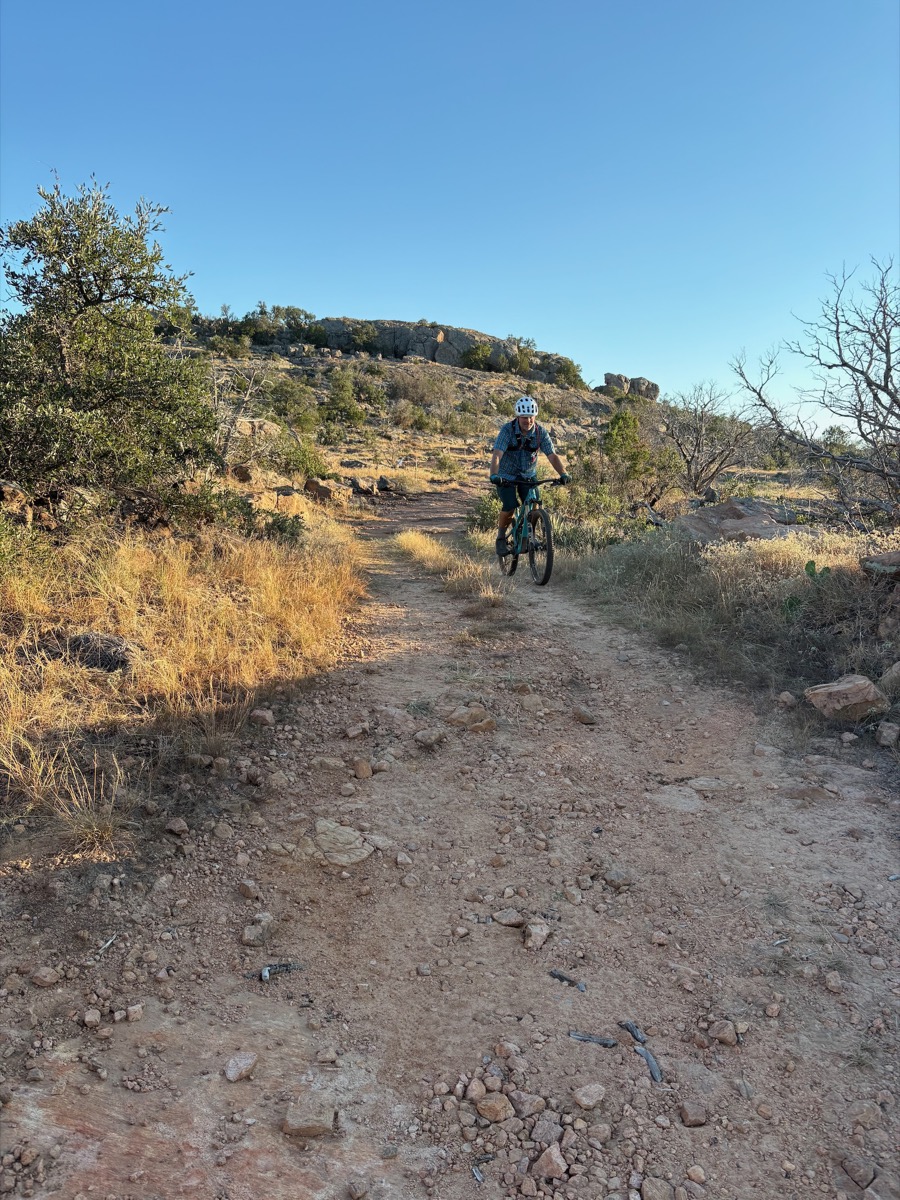
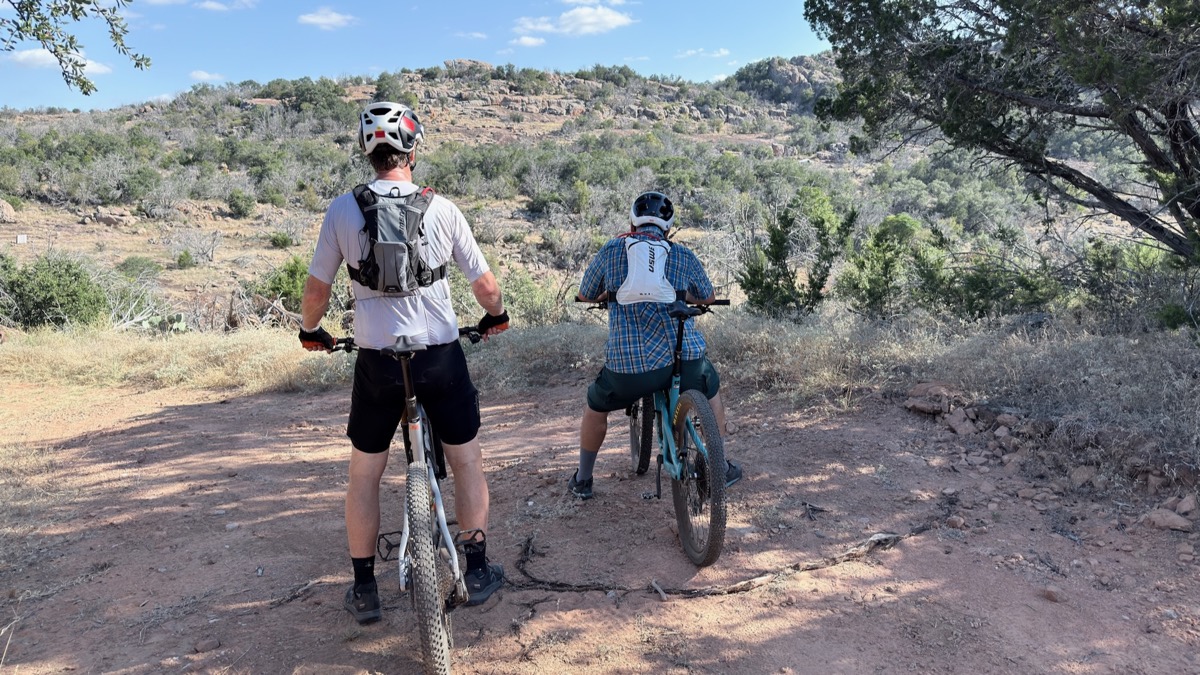
The first ride was a pre-lap of the Rattler course.
The bike worked better than I did.
Rear suspension felt progressive and supportive on climbs, smooth when things got ugly.
Might add a volume spacer later, but it’s close.
The 36 handled everything — no bob, perfect support.
Only change I’ll make is sliding the saddle forward about half an inch.
No drama.
No loose bolts.
No weird noises.
The bike just ripped.
At roughly 30 pounds, it feels like a trail bike that still remembers how to party.
Final Setup Sheet
| Component | Spec / Setting |
|---|---|
| Frame | 2019 Yeti SB150 T-Series Carbon |
| Fork | Fox 36 Factory GRIP X 160 mm (29”) – 95 psi, 30 % sag, HSC 8 out / LSC 10 out / Reb 10 out |
| Shock | Fox Float X (stock) – 28 % sag, LSC 8 out / Reb 10 out / Firm lever as needed |
| Tires | Maxxis Rekon 2.4 F / Rekon Race 2.35 R – 22 / 24 psi |
| Cockpit | 800 mm bar, 50 mm stem, 15 mm printed spacer below + 5 above, saddle +½″ forward planned |
| Drivetrain | SRAM 12-speed / 30 T ring |
| Brakes | SRAM 4-piston Code RSC – 200 mm F / 200 mm R |
| Pedals | Rebuilt used pair – cleaned & re-greased |
| Accessory | Tootsie Roll wrap on a custom 3D-printed bag mount on down-tube bottle bosses – flawless |
| Weight | ≈ 30 lbs |
| Head Angle (est.) | ~ 64.9° |
| BB Height (est.) | ~ 341 mm |
| Wheelbase (est.) | ~ 1218 mm |
The SB150 didn’t need saving.
It just needed some attention and a few smart changes to match how the Rattler profile. Lighter fork, lighter shock, a geometry tweak that landed where I hoped, and a few parts I 3d printed.
It’s the same bike I’ve always loved — just stripped back, tuned up, and ready for another chapter.
Breakfast Ride because Yeti over-forks their bikes for lunch rides.
I went the other way.