The SB150BR is Dead, Long Live the SB150
The SB150BR—”Breakfast Ride”—was my attempt to turn a 2019 Yeti SB150 enduro frame into a marathon race bike. Yeti positions the SB150 as their big-hit enduro machine: 150mm rear / 170mm front travel, built for charging steep technical terrain, bike parks, and rowdy descents where you need confidence at speed. It’s not a climbing bike—it’s a descending weapon.
The concept was simple: under-fork it from 170mm to 160mm travel and replace the coil with a Float X, creating something that felt like a cross between an SB140 and SB120. Lighter, snappier, steeper geometry for long climbs at places like Reveille Peak Ranch or my local Emma Long rides.
The experiment ultimately failed in its geometry goals but succeeded in ways I didn’t expect. It became my most-ridden bike, got me back into analog riding after relying heavily on the e-bikes, and carried me through the Austin Rattler and Fat Chuck’s Revenge. More on Fat Chucks soon. The miles and learnings along the way made the rebuild worth every wrench turn, even if the geometry never quite sorted itself out. You can read the full SB150BR build story here.
The Problem: Front-Center to Chainstay Ratio
After weeks of Emma Long rides, the climbing position issue became impossible to ignore. I was constantly scooting forward on technical punches—not because the bike felt unstable, but because the geometry was forcing me to micromanage weight distribution hundreds of times per ride. Things were uncomfortable and things were getting numb if you know what I mean.
The SB150BR’s long front-center (~780mm) combined with short chainstays (433mm) created a 1.80:1 ratio that left me rear-biased. At 240+ pounds putting down 900-watt punches on Emma’s technical climbs, that meant the front wheel would unweight under power, forcing constant position adjustments.
The math: Starting at roughly 36% front / 64% rear weight distribution, spiking power would drop me to ~30% front. That’s about 5 pounds less on the front wheel than ideal—enough to feel sketchy on loose climbs and cause the hand numbness I was experiencing from bracing against the bars.
The Decision
So I decided I needed a new frame—not all new parts, just an adjustment in geometry. It was of course going to be a Yeti. The question was: SB120? SB140? ASR? Surprise: it’s the SB140. Here’s why.
Yeti calls the SB140 their “all-day trail bike”—designed for aggressive all-mountain riding with 140mm rear / 150mm front travel. It’s positioned as the do-everything bike: climbs efficiently enough for big days, descends confidently on technical terrain, and doesn’t specialize in either direction. The Goldilocks bike.
Geometry that matters:
Reach: 480mm (same as 150BR but higher stack) Chainstays: 438mm (+5mm vs 150BR) Front-center: ~779mm (slightly shorter) FC:CS ratio: 1.78:1 (vs 1.80 on 150BR) Seat angle: 77° (0.5° steeper) Stack: 621mm (+6mm higher)
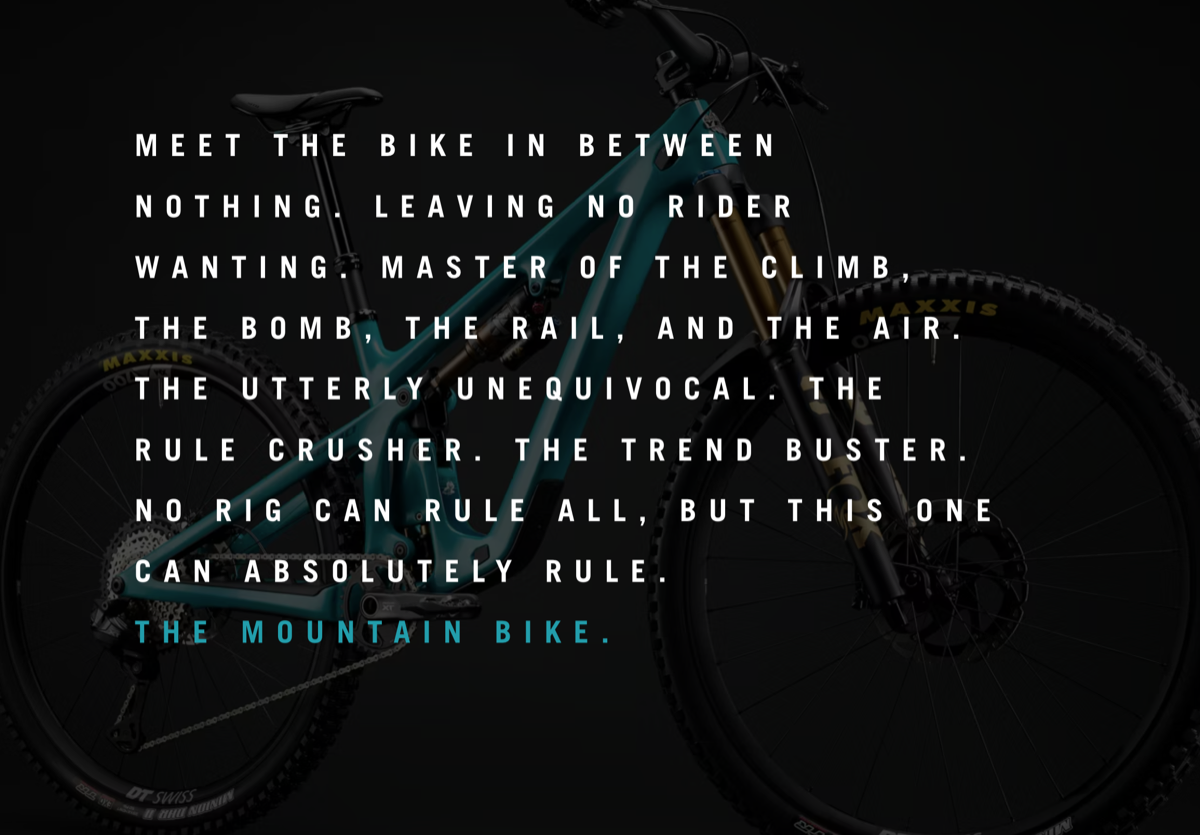 Big promises. Let’s see. (Image: Yeti Cycles)
That 2% improvement in weight distribution—roughly 5 pounds more on the front wheel—combined with a higher, more upright position means I can stay neutral in the saddle instead of constantly managing front wheel traction. The SB140 gives me 140mm rear / 160mm front travel with my Fox 36, which is adequate for Emma Long’s technical descents and rock gardens while improving climbing position. Over three rides per week at Emma Long, that’s hundreds of micro-adjustments I don’t have to make. The SB140 fits the actual riding: technical climbing where weight distribution matters, rowdy descents where travel matters, and consistency over specialization.
Why Not the SB120?
Yeti markets the SB120 as their not quite XC nor pure trail bike—120mm rear / 130mm front travel, optimized for fast trail riding where efficiency matters. It’s the bike for riders who want XC climbing performance but need more capability than a pure race bike on the descents.
On paper, the SB120 actually has better climbing geometry—front-center to chainstay ratio of 1.77:1 puts even more weight forward naturally. It would solve the scooting problem completely. But Emma Long (and the other stuff I ride a lot) aren’t XC courses. It’s technical, punchy, with steep descents and rock gardens that punish insufficient travel. The 120mm rear / 130mm front spec would handle it, but not comfortably. Three times per week on that terrain, I need something that doesn’t make me think about capability—I need to know the bike has enough suspension to handle whatever line I choose. The SB140 is less climbing-focused than the 120, but it’s a meaningful step up geo wise from the 150BR without sacrificing Emma Long capability.
Why Not the ASR?
Yeti positions the ASR as their World Cup XC race platform—100mm travel, sub-22-pound builds, geometry tuned for maximizing power transfer and climbing efficiency on smooth, fast courses. It’s a purpose-built race bike for riders chasing podiums, not a daily trail rig.
The ASR is a pure XC race weapon—light, efficient, optimized for smooth speed. But I’m not building a pure race bike; I’m building my daily analog rig for Emma Long, Bentonville, and some races. The ASR would save weight but give up the descending capability I actually use three times per week. It’s a bike for a different kind of riding than what I do.
The Build (so far)
Brian at N+1 Bikes sourced the frame. Everything transfers from the SB150BR: Fox 36 Factory GRIP X 160mm, Float X shock, XX1 cranks with Quarq power meter, Wolf Tooth dropper, cockpit setup. New additions are SRAM Level Silver brakes for weight savings, Reserve 30mm carbon rims with Chris King hubs, and SRAM Eagle 90 mechanical transmission. The SB150BR frame converts to park duty with a Fox 38 170mm fork and coil shock—two distinct bikes doing their jobs well instead of one bike compromising. Long live the SB150.
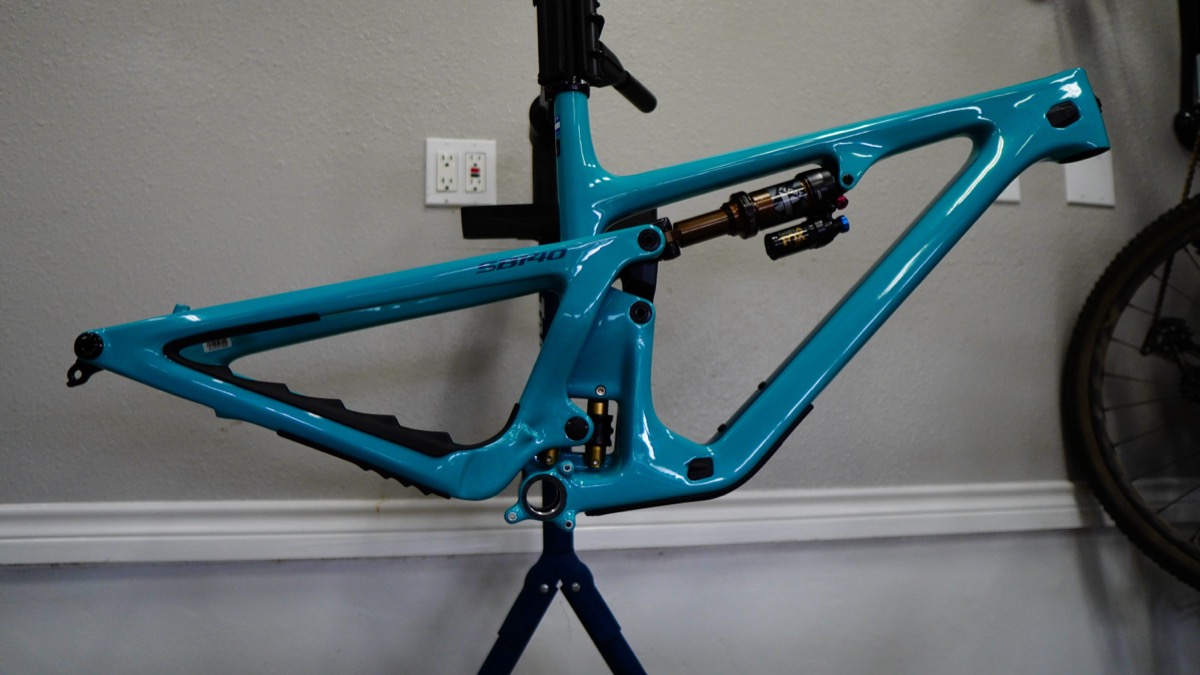 Brand new frame waiting for some parts
Key learnings
The experiment wasn’t a waste. It got me riding analog consistently again, proved I could race technical terrain on a 30-pound bike, and showed me exactly what geometry issues matter versus what’s just theory. Racing the Rattler and Fat Chuck’s on that bike revealed where my fitness actually was—FTP jumped from 195w to 249w mid-race—and where the bike was holding me back. Fighting geometry every ride at Emma Long was leaving performance on the table and beating up my hands. But without those miles, I wouldn’t know why the SB140 is the right call. The SB140 isn’t faster on paper. It’s 2-3% better weight distribution, 6mm more stack, and a slightly steeper position that lets me stay centered on the bike naturally. For three-times-per-week Emma Long sessions and occasional MTB racing on technical Texas terrain, that’s the move.
The SB140 is my new analog rig for the second half of this year’s journey. I’ll post back on th build progress. Now, it’s time to sign up for some more races.