Introducing Ridetool

My first real mountain bike was a Specialized Stumpjumper FS. 1992. The very first bike Specialized made with front suspension. There was no way in hell I could afford the $1,200 price tag in one shot. I figured if I could squeeze my beer budget down and eat the then $0.88 Taco Bell bean burritos, I could make payments. I had no credit, so layaway it was. I can’t remember how long it took, but I do remember thinking for fuck’s sake the new model is going to come out before I can pay this one off.
I did finally get it paid off. Battleship gray, two inches of suspension, fat tires. What a whip. I rode the fuck out of that thing. That’s when I fell in love with mountain biking.
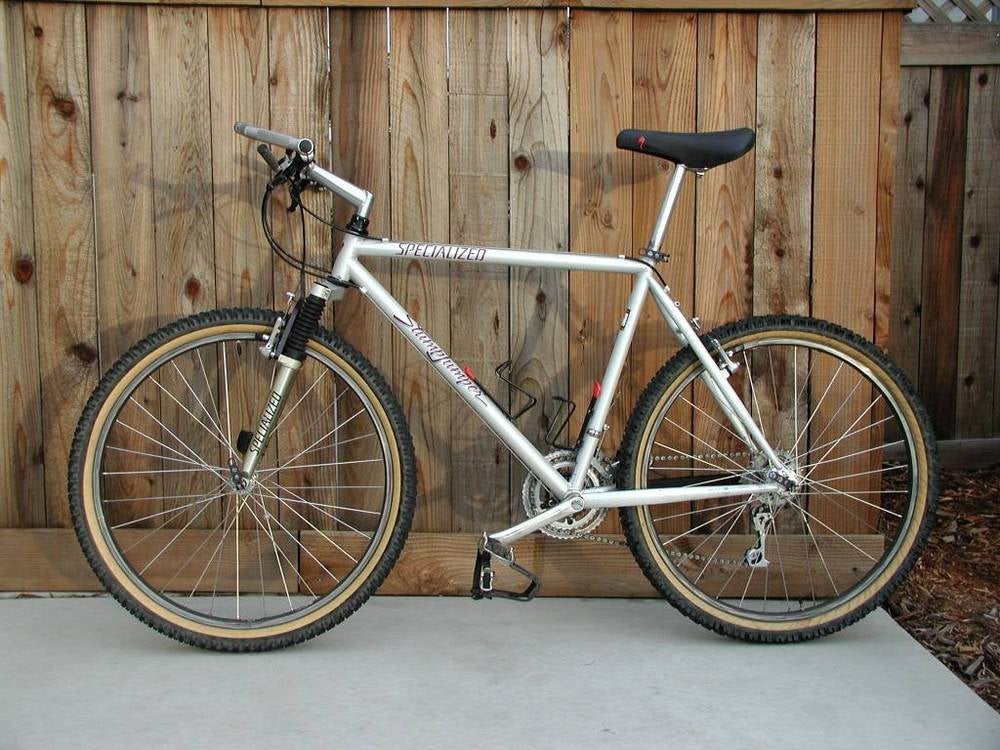 the 1992 Specialized Stumpjumper FS — image credit: mtbr.com
the data thing
Around 1995, I’d been working on a series of CAD projects that involved data systems. I started to love databases and database engineering. I wanted to move from the CAD world to something more exciting. I was living in San Francisco at the time and the startup vibe was starting to vibe. First it was Sybase SQL Anywhere, then Oracle. I went deep and ended up pivoting my career to being a DBA. Back then the guy who supported the production database, the crown jewels of data, who wore the pager. That guy was the shit.
I built a career on data, databases, software. Worked at some bellwethers of tech — PayPal, eBay, Shutterfly, Match.com, MongoDB. I co-founded two data focused startups and sold them (ObjectRocket, and Eventador.io). Being a data nerd is who I am. Literally 30 years of work.
the collision
But it wasn’t until sometime around November that I realized what I’d been missing. Two things converged for me that equated to a monster holy-shit moment.
One — I’d been focusing on my riding. A renewed push to ride more, lose weight, and be consistent. A journey I’ve deeply detailed here. Two — the rise of AI coding capabilities. I’m no ace programmer, but I do write code professionally. Half of ObjectRocket was my work. Similar at Eventador.
The collision of these two things — my deep love for data, my deep love for riding — crashed together with modern AI coding techniques. And I decided to just build Ridetool.
I wrote about all the data your bike generates and said I’d follow up with a deeper dive into intervals.icu. I never did. Instead I just wrote my own thing. Because none of the existing products out there were doing it for me. They were too focused on online competition, or too hard to use, or just too simple in design. I wanted something simple but powerful for guys like most of us — we don’t want to compete, we just want to improve. I wanted core features to allow me to compare to myself. Am I getting better? I needed to be neck deep in this journey to see that. Once I did, I couldn’t look back. I knew I had to build it.
built from the couch
Then came the knee injury. Weeks off the bike. I couldn’t ride, couldn’t drive, could barely sleep. I watched my CTL crater and my fitness numbers die. All that work evaporating. It was dark.
But I could code. So that’s what I did. I channeled all of that frustrated energy, the energy that should have been going into pedaling, into building Ridetool. Every feature came from a question I’d been asking myself as a rider. How was my month? Am I being consistent? Am I actually getting better or just tired? I built the tool I wanted to open when I finally got back on the bike.
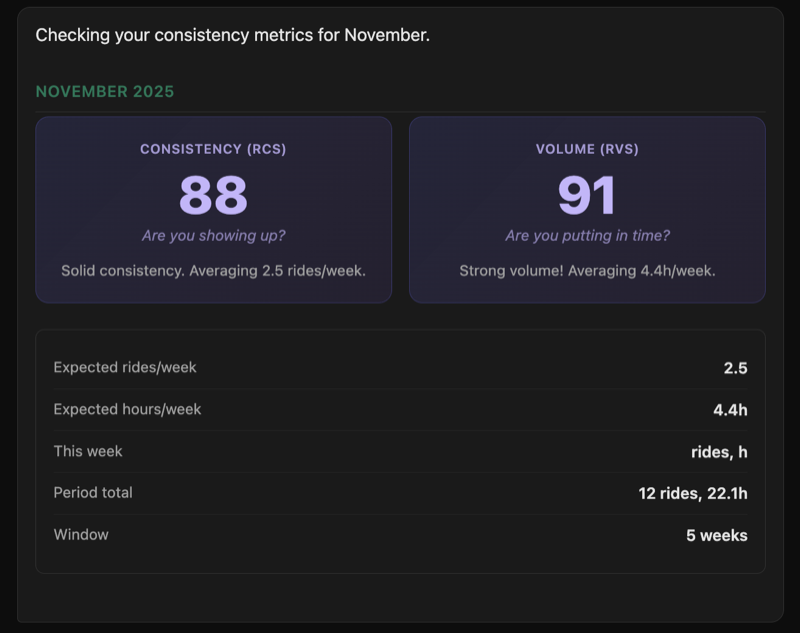 am I showing up? am I putting in the time?
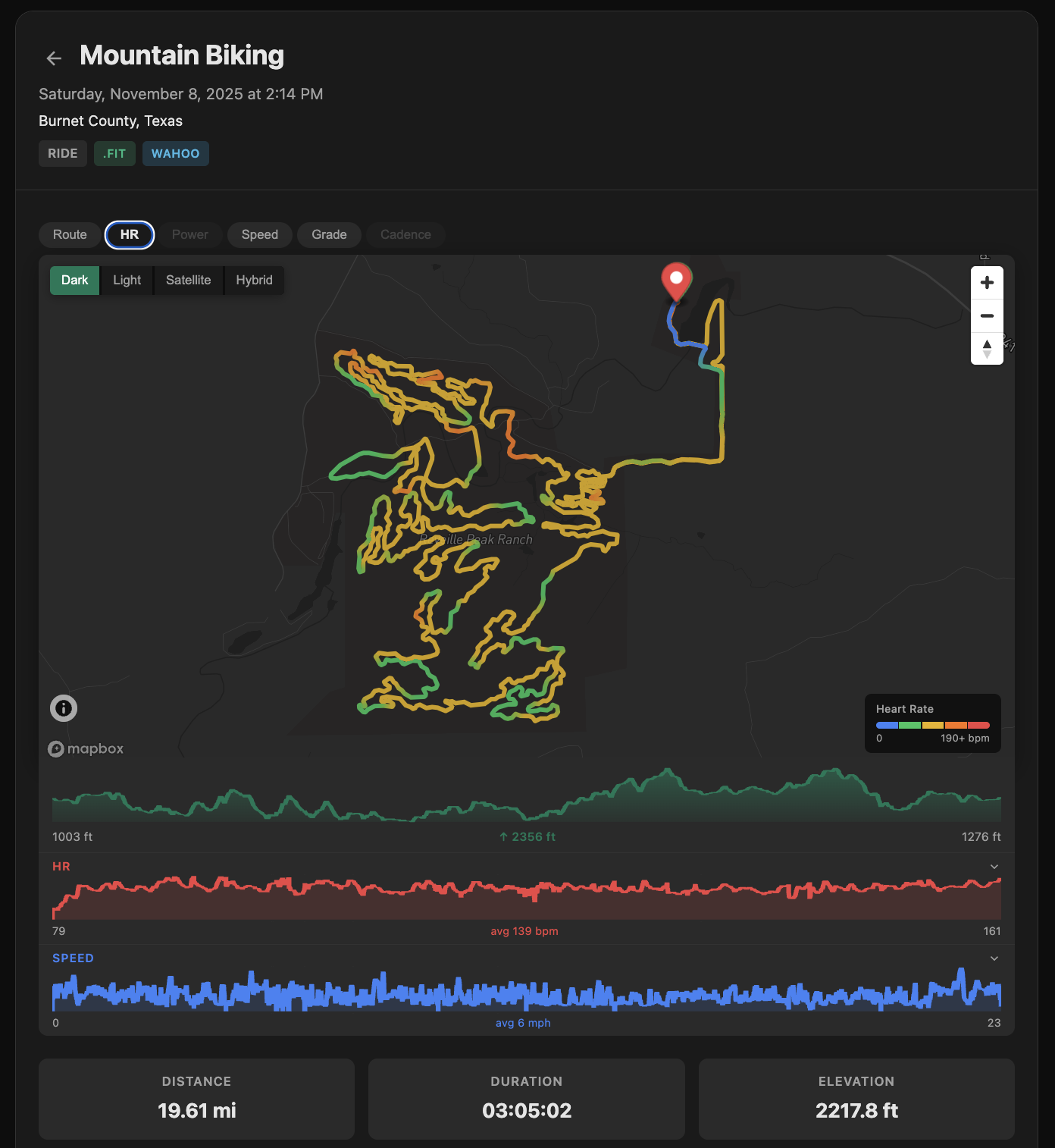 the Rattler race in Ridetool — map, stats, the whole picture
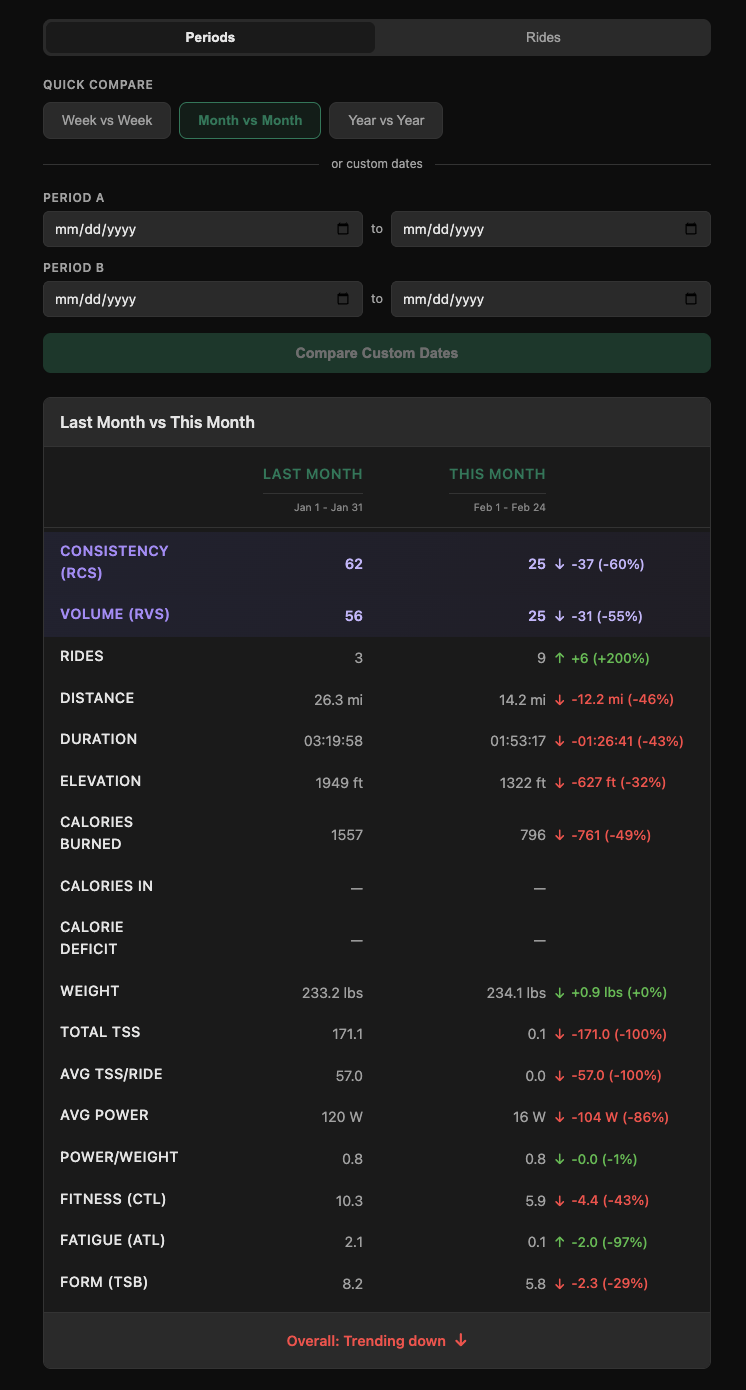 comparing months — the data doesn’t lie
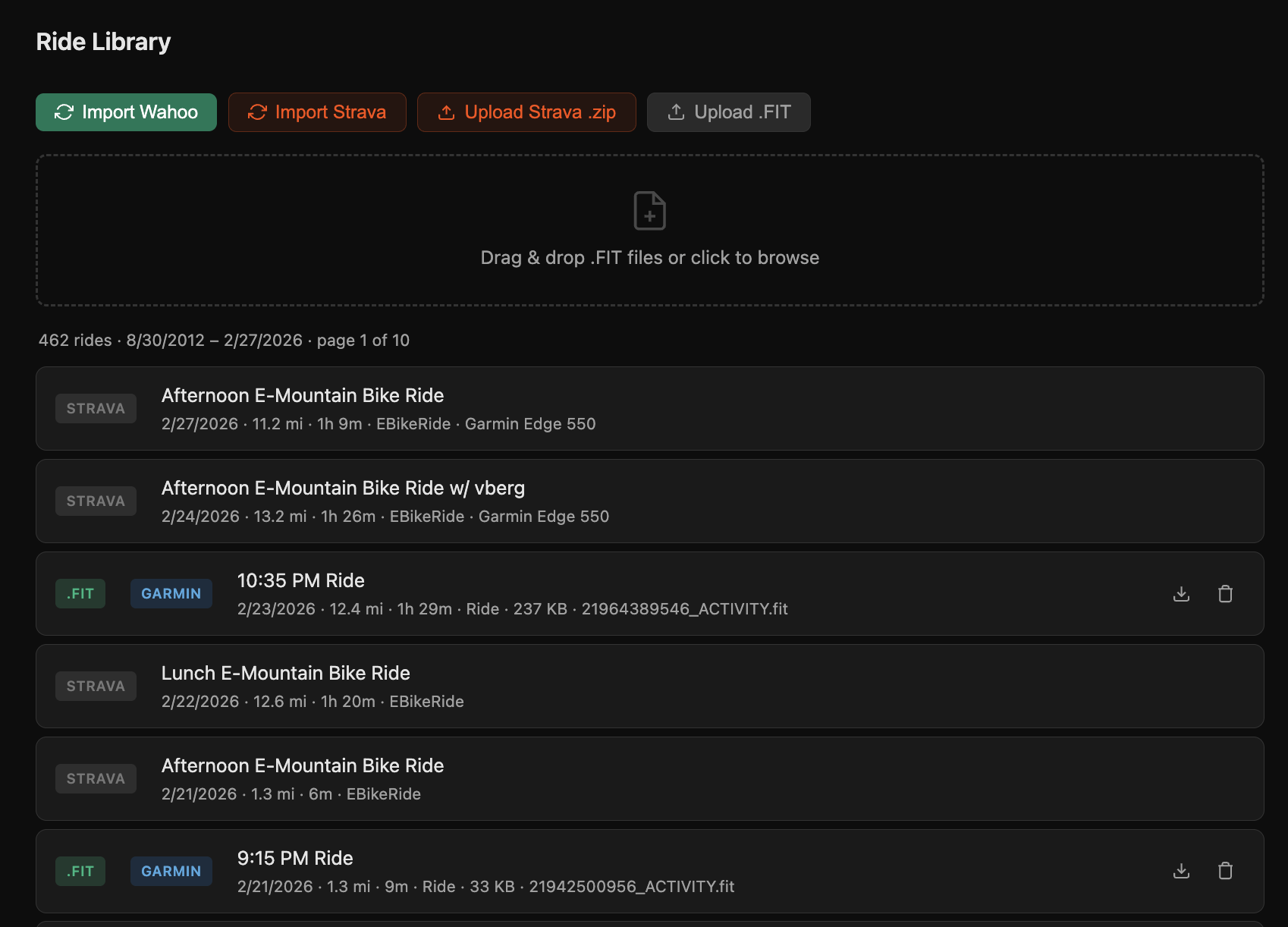 the ride library — your .FIT files, Strava imports, all in one place
introducing Ridetool
Almost 40 years of riding and 30 years of data expertise wrapped up in a self-improvement and tracking platform. Built because I needed this functionality, and built for the love of riding and data.
I needed something that kept the source .fit files intact. I couldn’t live with myself if we didn’t have an honest approach to user data. The customer isn’t the product for Ridetool — it’s not a social network. It’s a data-centric approach to ride data. I wanted simple and honest. It’s got amazing map views and telemetry, ride stat tallies over weeks or months, and it allows you to compare against time periods, against yourself. All of this for a modest price point.
And this is just the tip of the iceberg. This isn’t just a product, it’s a journey. There is much functionality to add, and my plan is to keep a solid cadence adding new capabilities and usefulness. That $29/year will go farther and farther. Maybe a premium plan down the line for some really advanced stuff I’m thinking about. But you tell me — you, the user, are ultimately the arbiter of this functionality. I build for you, and for me second.
There’s way more functionality than I can cover here — check out the docs for the full rundown.
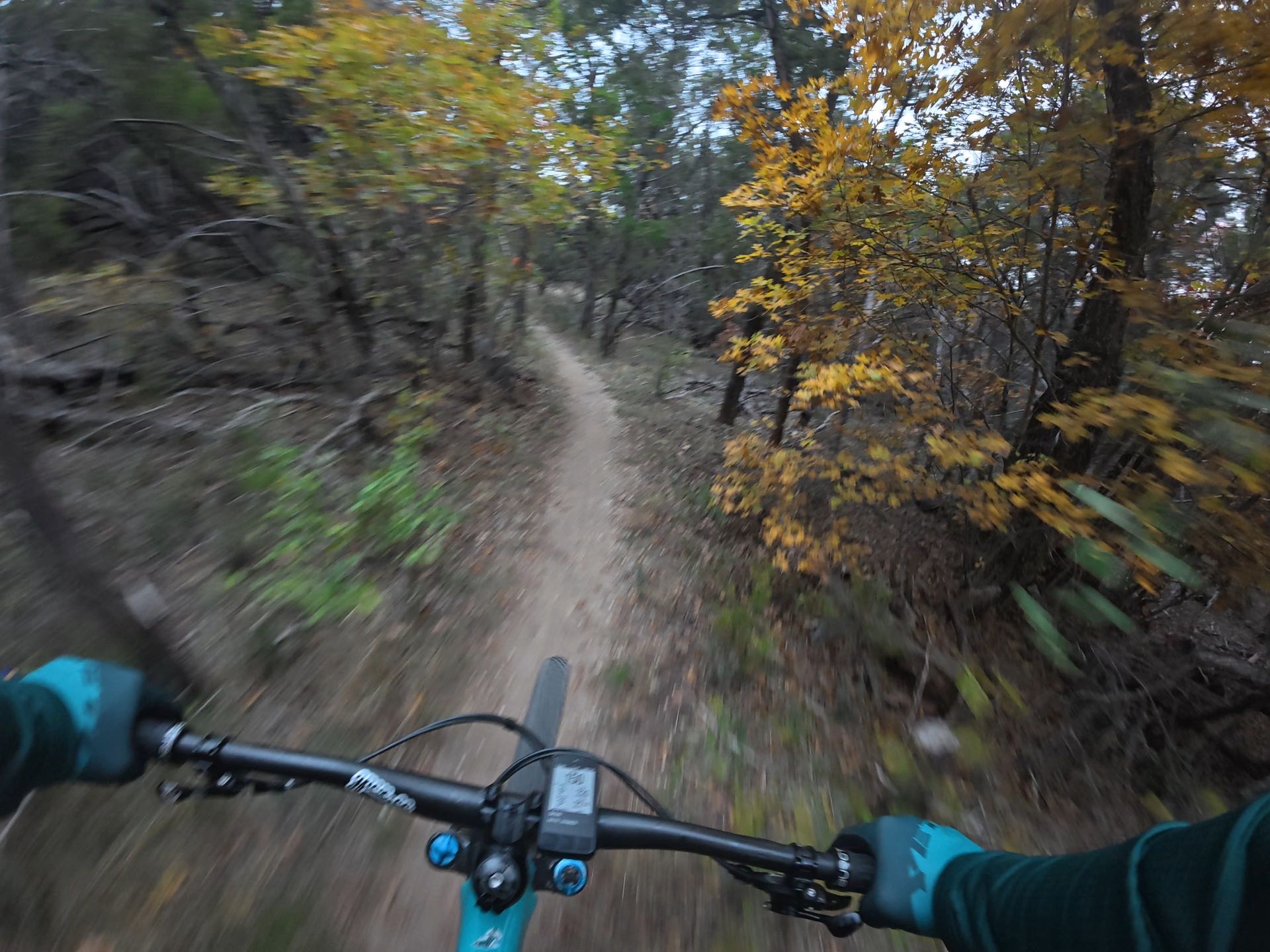 from a Stumpjumper on layaway to here, almost 40 years of riding, still pushing
I hope you try it and join me on this journey. Log in at ridetool.cc and hit the Discord button. I’d love to hear from you.